Indoor Dryer Vent Conversion in Philadelphia & Surrounding Areas
Professional Dryer Vent services
throughout Philadelphia and the surrounding suburbs
SERVICES
Indoor Dryer Vent Conversion in Philadelphia & Surrounding Areas
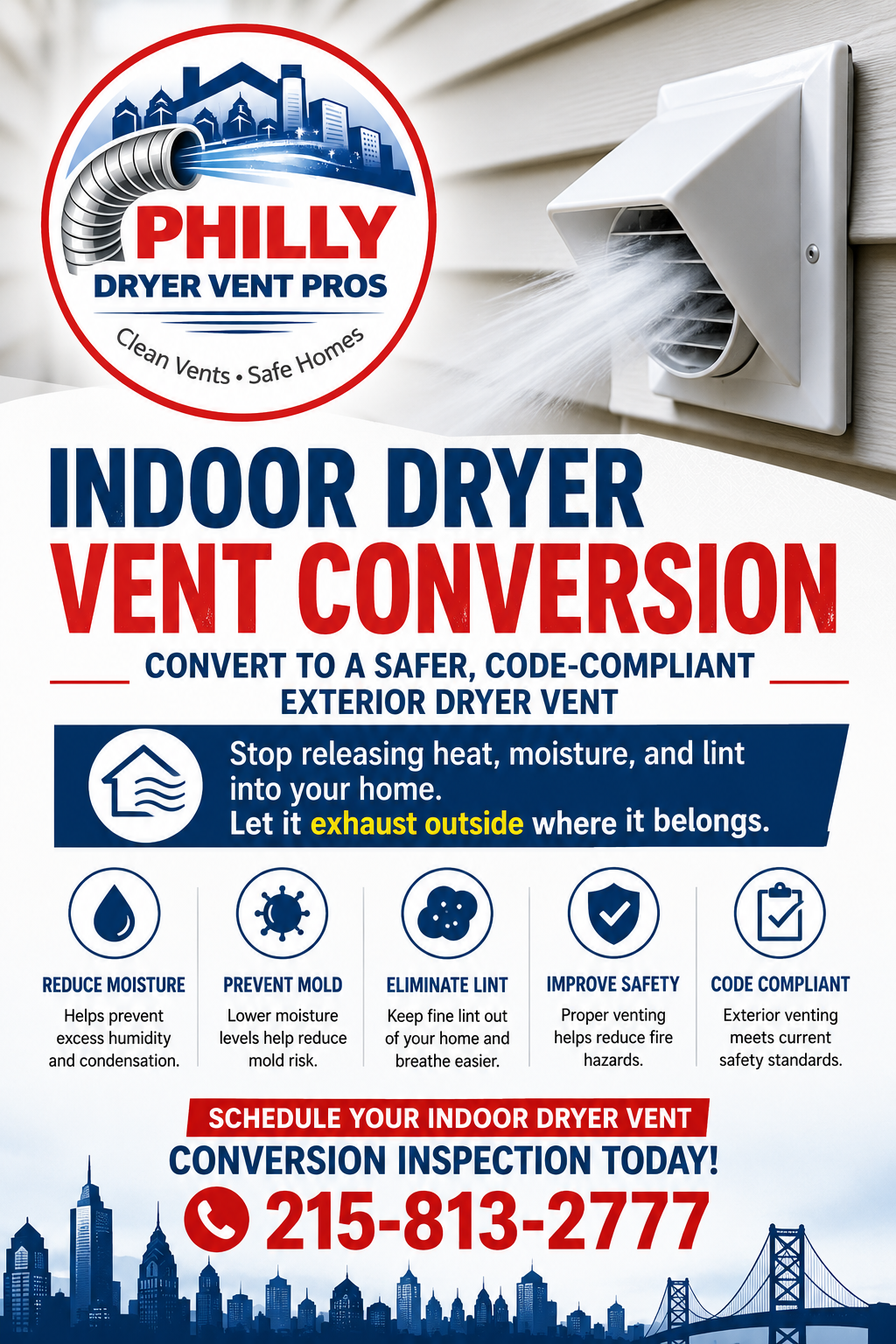
Still Using an Indoor Dryer Vent?
If your dryer vents into a bucket, water box, lint trap, or indoor dryer vent kit instead of exhausting outdoors, it may be time to consider converting it to a proper exterior dryer vent.
We've helped many homeowners throughout Philadelphia who inherited an indoor dryer vent from a previous owner or installed one because adding an exterior vent seemed difficult. While these systems may appear convenient, they are generally not recommended as a long-term solution.
At Philly Dryer Vent Pros, we help homeowners convert indoor
dryer vent systems into safer, code-compliant exterior dryer vents designed for long-term performance.
Serving Philadelphia & surrounding suburbs with licensed, professional service.
What Is an Indoor Dryer Vent Kit?
An indoor dryer vent kit redirects a dryer's exhaust into a bucket, water reservoir, or lint filter instead of venting outdoors. These systems are sometimes found in older homes, apartments, finished basements, or remodeled laundry rooms where an exterior vent was never installed.
While they may seem like a convenient workaround, they are generally not recommended as a long-term solution because they allow heat, moisture, and fine lint particles to remain inside the home.
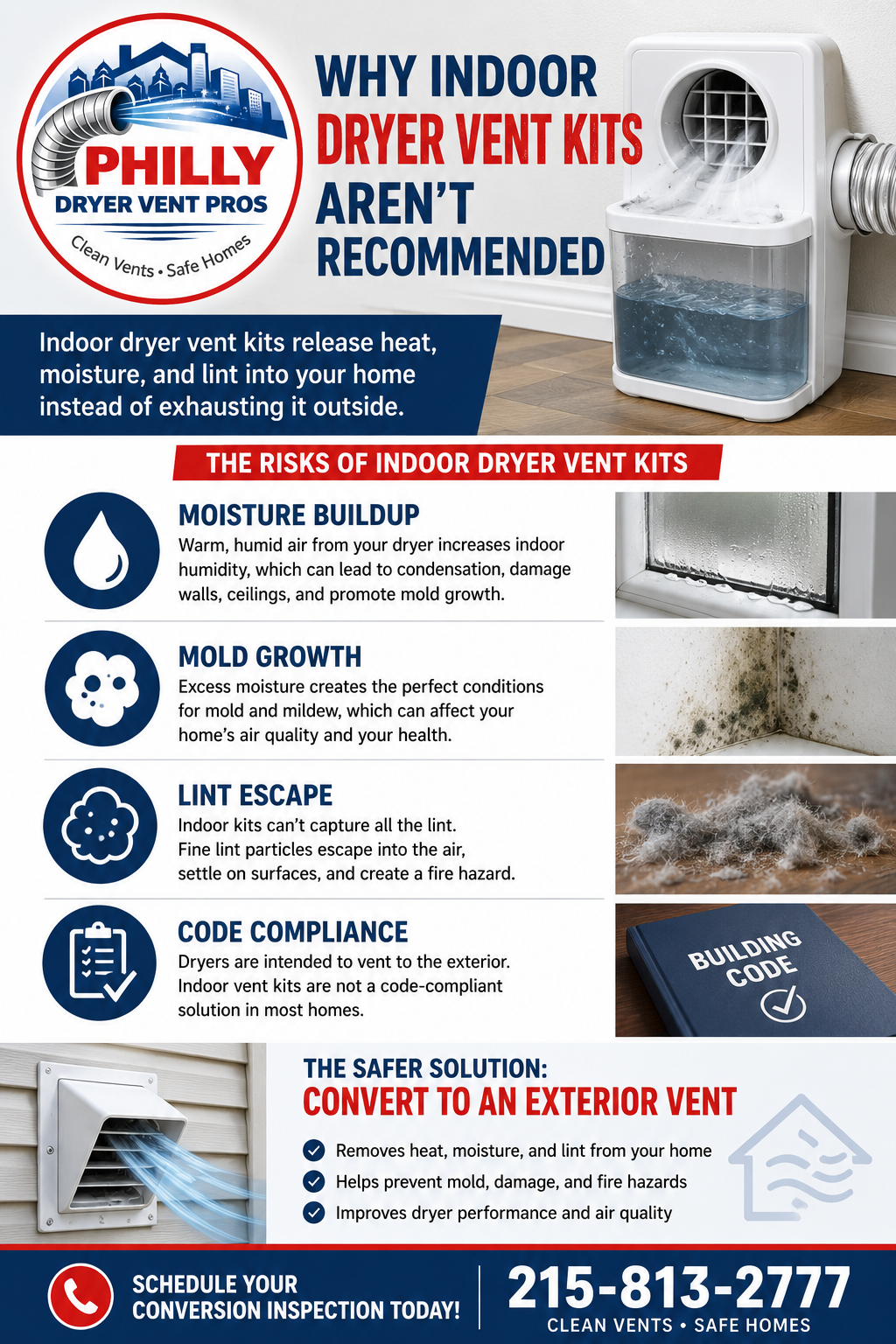
Why Indoor Dryer Vent Kits Aren't Recommended
Indoor dryer vent kits are often marketed as an easy solution when an exterior vent doesn't exist. However, they don't eliminate many of the issues created by a clothes dryer.
Even when equipped with a lint filter or water reservoir, they still allow heat, moisture, and fine lint particles to remain inside the home.
For most homes, exhausting the dryer outdoors is the preferred long-term solution.
Moisture Can Build Up Inside the Home
Every dryer cycle produces warm, moisture-laden air that is designed to be exhausted outdoors.
When that moisture is released inside your home instead, it increases indoor humidity levels. Over time, excess humidity can contribute to condensation on windows, walls, and other cool surfaces while creating damp conditions in laundry rooms, basements, and other enclosed spaces. Left unchecked, persistent moisture can damage building materials and create conditions that support mold and mildew growth.
Older Philadelphia rowhomes and finished basements can be especially susceptible because these areas often have limited ventilation and already tend to retain more moisture.
Converting to a properly installed exterior dryer vent removes heat and moisture from your home the way your dryer was designed to operate, helping protect your home's indoor environment while improving overall dryer performance.
Indoor Dryer Vents Can Create Conditions That Support Mold Growth
Persistent indoor moisture creates conditions where mold is more likely to develop, especially in damp areas with limited airflow such as basements, laundry rooms, and utility spaces.
While an indoor dryer vent isn't the only cause of mold, repeatedly exhausting warm, humid air into your home can contribute to elevated humidity levels that allow mold and mildew to grow on drywall, wood, insulation, and other building materials over time. Once mold becomes established, it can be difficult and expensive to remediate, particularly if it spreads behind walls or into hidden areas.
Converting to a properly installed exterior dryer vent helps remove that ongoing source of moisture, creating a drier indoor environment while allowing your dryer to vent the way it was designed.
Lint Still Escapes
Many homeowners assume an indoor dryer vent kit captures all of the lint.
It doesn't.
Even high-quality indoor dryer vent kits can allow fine lint particles to escape into the surrounding air. Over time, that lint can settle around the laundry area, collect on surfaces, enter your home's air circulation, and reduce indoor air quality. This can be especially concerning for households with allergies, asthma, or other respiratory sensitivities. Lint is also highly combustible, so allowing it to accumulate inside the home creates an unnecessary fire risk if it builds up near heat sources.
A properly installed exterior dryer vent carries heat, moisture, and lint safely outdoors, helping keep your living space cleaner while improving dryer performance and reducing the need for frequent cleanup.
Code Compliance Matters
A properly installed dryer vent should exhaust outdoors and follow current safety recommendations for materials, routing, support, and termination. Indoor dryer vent kits are generally not considered an appropriate long-term solution for permanently installed residential dryers because they release heat, moisture, and lint into the home instead of exhausting them outdoors.
If your home currently relies on an indoor dryer vent, we'll inspect the entire setup and explain whether converting it to a properly vented exterior system is the safest and most effective long-term option. If improvements are needed, we'll walk you through your options and recommend a solution designed for safe airflow, efficient dryer performance, and long-term reliability.
If you're preparing to sell your home or recently purchased one, an indoor dryer vent may also be identified during a home inspection. Addressing the issue before listing your home—or shortly after moving in—can help prevent surprises, improve safety, and provide greater confidence that your dryer vent system is functioning the way it should.
Why Homeowners Choose to Convert
Homeowners contact us for indoor dryer vent conversions for many reasons, including:
• They're concerned about excess moisture inside the home
• They're tired of maintaining an indoor dryer vent kit
• They recently purchased a home with an indoor dryer vent
• They want a more code-compliant installation
• They're remodeling or relocating the laundry room
• They're preparing to sell their home
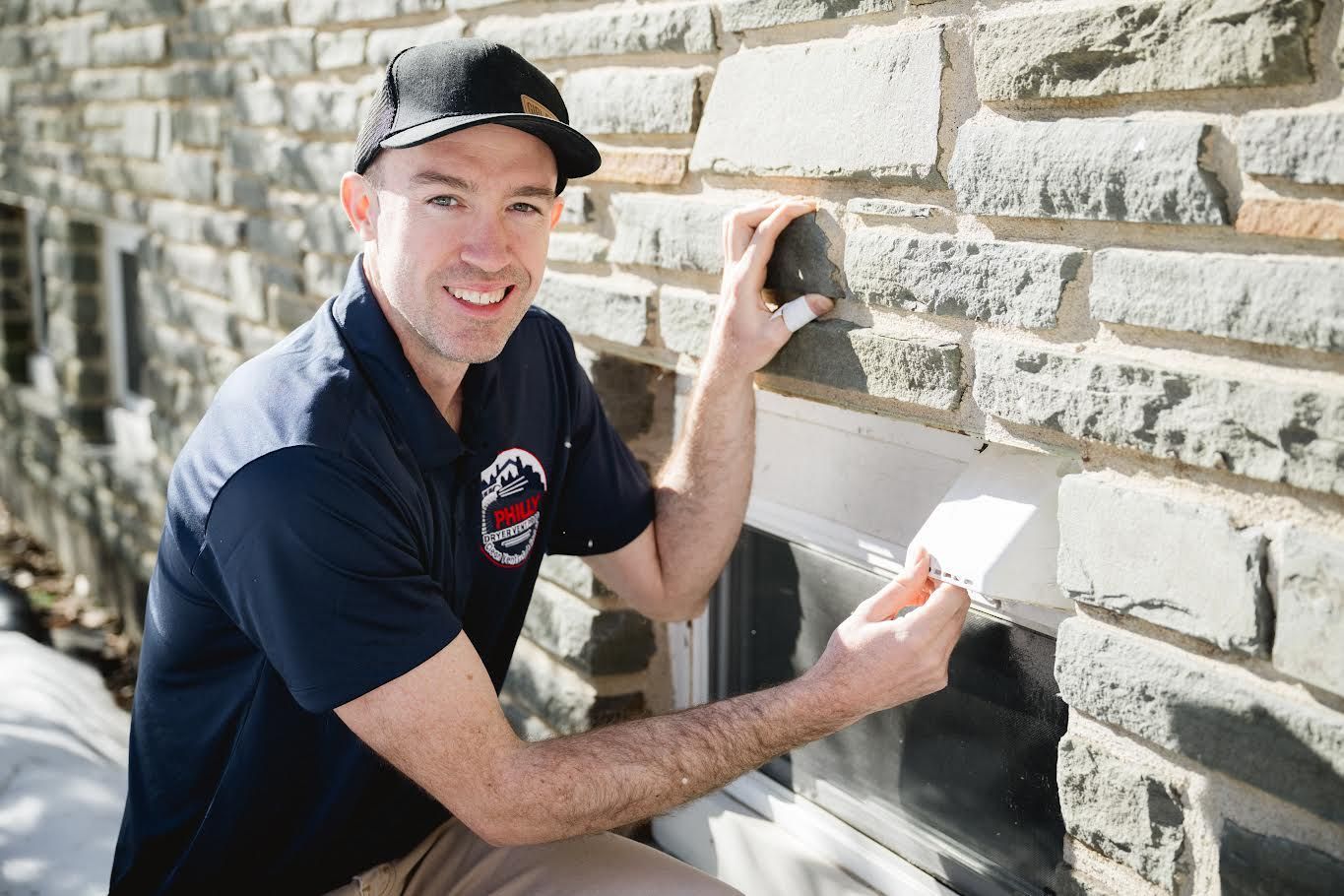
Converting to an Exterior Dryer Vent
Every home is different.
When converting an indoor dryer vent, we evaluate:
• Dryer location
• Exterior access
• Wall materials, including brick, stone, stucco, and siding
• Vent length
• Existing ductwork
• The safest route outdoors
Some conversions are straightforward.
Others require rerouting the dryer vent or creating an entirely new vent path.
Sometimes portions of the existing vent can be reused, while other homes require a completely new route to the exterior. We design the vent system around your home's construction while maximizing airflow, safety, and long-term performance.
Improving the vent system can also help resolve common dryer performance issues caused by restricted airflow, such as a dryer that isn't drying properly, takes multiple cycles to dry, overheats, or produces a burning smell.
Our goal is to install a dryer vent that safely exhausts outdoors while minimizing disruption to your home.
What's Included in an Indoor Dryer Vent Conversion?
Most conversions include:
• Removal or disconnection of the indoor dryer vent kit
• Exterior vent hood installation
• Proper duct support
• Sealed duct connections
• Airflow testing
If additional work is needed because of your home's layout, we'll explain your options before any work begins.
Common Homes We Convert
We regularly perform indoor dryer vent conversions in:
• Philadelphia rowhomes
• Older homes
• Finished basements
• Homes where a previous owner installed an indoor vent kit
• Homes undergoing remodeling
• Newly purchased homes discovered to have improper dryer venting
• Homes being prepared for sale
Most homes can be converted, even when the vent route initially appears challenging.
Schedule an Indoor Dryer Vent Conversion Inspection
If your dryer currently vents indoors, Philly Dryer Vent Pros can evaluate the safest way to convert it to a properly vented exterior system.
Most indoor dryer vent conversions can be completed in a single visit, depending on your home's layout and the vent route.
We proudly provide indoor dryer vent conversion services throughout:
• Fishtown
• Chestnut Hill
• Northeast Philadelphia
• Roxborough
• Manayunk
We also serve homeowners throughout:
• King of Prussia
• Montgomery County
• Bucks County
• Delaware County
• Chester County
Schedule your indoor dryer vent conversion inspection today and we'll help you determine the safest, most effective solution for your home.
Frequently Asked Questions
Are indoor dryer vent kits recommended?
Indoor dryer vent kits are generally not recommended as a long-term solution because they release heat, moisture, and fine lint particles into the home instead of exhausting them outdoors.
Can an indoor dryer vent be converted?
Yes. In many homes, an indoor dryer vent can be converted to a properly vented exterior system. The best approach depends on your home's layout and construction.
Can an indoor dryer vent contribute to moisture or mold problems?
Indoor dryer vents release warm, humid air into the home, which can contribute to excess indoor moisture and conditions that support mold growth over time.
Do indoor dryer vent kits capture all of the lint?
No. While indoor vent kits capture some lint, fine lint particles can still escape into the surrounding air and settle throughout the laundry area.
How long does an indoor dryer vent conversion take?
Many indoor dryer vent conversions can be completed in a single visit. The exact time depends on the home's layout, vent route, and installation requirements.
Can you install an exterior dryer vent through brick?
Yes. We regularly install dryer vents through brick, stone, stucco, siding, and other common exterior materials found throughout Philadelphia and the surrounding area.
Schedule Professional Dryer Vent Services Today
If your dryer vent system may not be installed safely or efficiently, call or text Philly Dryer Vent Pros today.
We’ll inspect the system, identify any airflow or safety concerns, and help ensure your dryer vent installation is safe, efficient, and properly vented outside.