Just Bought a House Without a Dryer Hookup in Philadelphia?
Professional Dryer Vent services
throughout Philadelphia and the surrounding suburbs
SERVICES
Just Bought a House Without a Dryer Hookup?
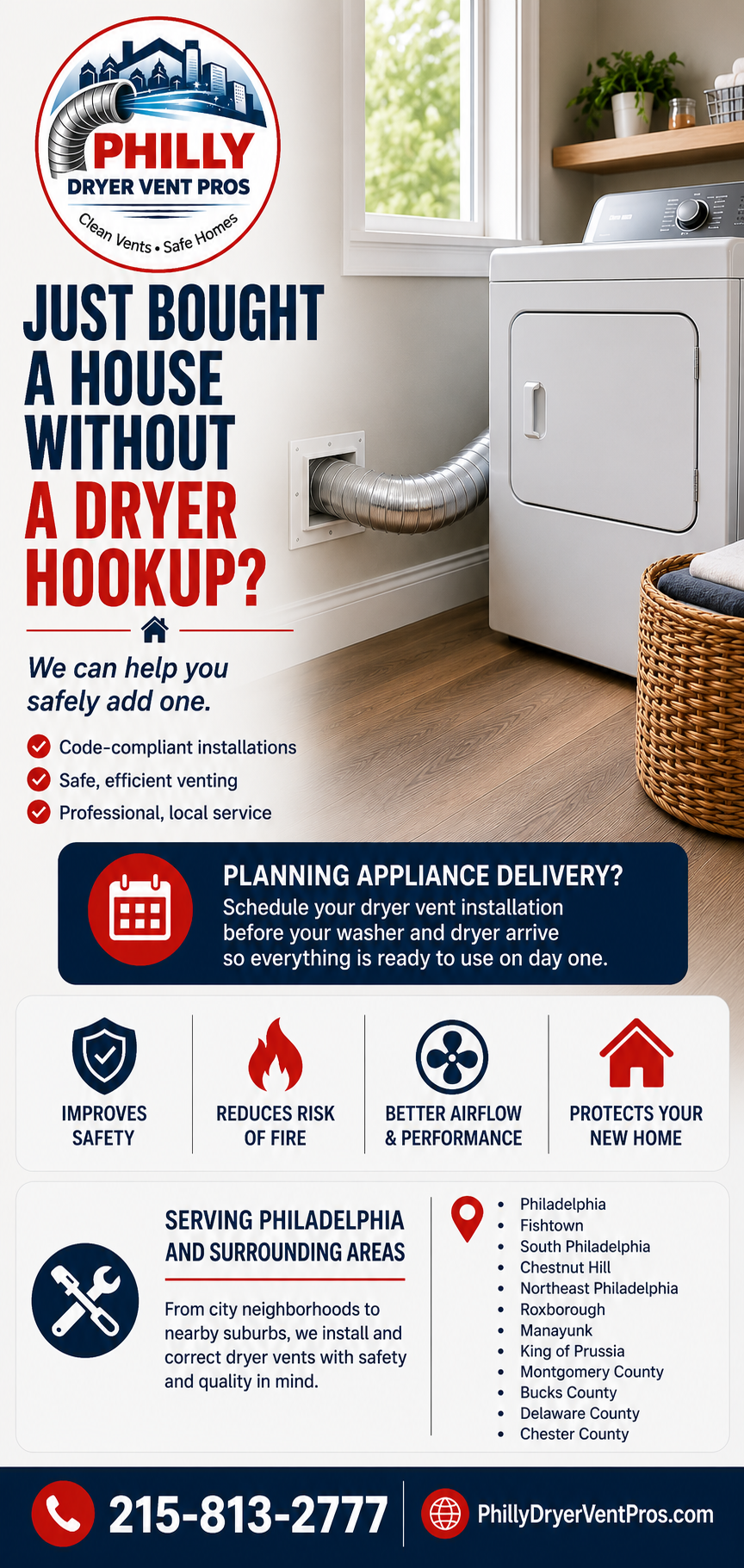
You just bought your new home, your washer and dryer are on the way, and then you discover there's no safe, code-compliant dryer hookup.
This is more common than many new homeowners realize. Older Philadelphia homes, rowhomes, remodeled properties, and homes where the previous owner changed the laundry layout may not have a safe, code-compliant dryer vent.
The good news is that in many cases, a proper dryer vent can be installed. In many cases, the installation can be completed in a single visit, allowing you to get your laundry room ready without a lengthy renovation.
We've helped many Philadelphia homeowners who discovered after closing that their new home wasn't actually ready for a dryer. Sometimes the laundry room looks complete until the appliance is delivered. Other times, there's an old vent that isn't safe to use. We've seen everything from hidden indoor dryer vents to vent openings covered during renovations, and in most cases there's a safe solution.
Philly Dryer Vent Pros helps new homeowners
install safe, code-compliant dryer vent systems so their laundry area works the way it should from day one.
Serving Philadelphia & surrounding suburbs with licensed, professional service.
You Bought the House. Now the Dryer Has Nowhere to Vent.
A missing dryer hookup can create a lot of frustration after closing. You may have a washer connection but no dryer vent. You may have an outlet but no ductwork. Or you may find an old, unsafe setup that should not be used.
This is something we run into regularly. Homeowners often call us after moving day because they assumed the dryer could simply be connected. Once we inspect the laundry area, we sometimes find there was never a proper dryer vent installed or that the existing setup doesn't meet current safety standards.
In other homes, we find an existing dryer vent that simply isn't safe to use because of excessive lint buildup, damaged ductwork, or an improper installation left behind by a previous owner.
Common situations we see include:
• No dryer vent opening in the laundry area
• No exterior vent termination
• Old indoor vent box left behind
• Dryer pushed into a location that was never designed for one
• Basement laundry areas with no proper route outside
• Remodels where the dryer vent was removed or covered
• Unsafe foil or vinyl hose from a previous owner
Before using the dryer, it is important to make sure the venting is actually safe.
Can a Dryer Vent Be Added After You Buy the Home?
In many cases, yes. A dryer vent can often be installed after you buy the property, but the correct route depends on the layout of the home.
We look at:
• Where the dryer will be located
• The closest safe exterior wall
• Whether the vent needs to pass through brick, siding, stone, or another surface
• The total vent length
• The number of turns needed
• Whether the duct can be supported properly
• Whether the exterior vent hood can be placed safely
Every home is different, which is why we inspect the layout before recommending a vent route. We've installed dryer vents in Philadelphia rowhomes, older homes, finished basements, brick homes, and remodeled properties where adding a dryer vent required careful planning.
Sometimes the best solution is rerouting the dryer vent rather than trying to reuse the existing path. This is especially true when the original vent route is too long, damaged, improperly installed, or no longer meets current safety recommendations.
Some installations are straightforward, while others require specialized routing through brick walls, finished basements, crawl spaces, or other challenging layouts. We design the vent route around your home's construction while keeping safety and long-term performance in mind.
Our goal is to create a system that vents safely outdoors while minimizing disruption to your home.
Does It Matter if Your Dryer Is Gas or Electric?
Whether your dryer is gas or electric, it still needs a proper dryer vent that exhausts outdoors. Many new homeowners assume only gas dryers require venting, but that's a common misconception.
Both gas and electric dryers produce heat, moisture, and lint during every drying cycle. A properly installed dryer vent safely removes these byproducts from the home, helping maintain efficient airflow and reducing the risk of moisture buildup and lint accumulation.
The primary difference is that gas dryers also produce combustion byproducts, making proper venting especially important. Regardless of the type of dryer you own, having a safe, properly installed exterior dryer vent is essential for performance, efficiency, and long-term safety.
Indoor Dryer Vents Are Not a Long-Term Solution
Some homes are sold with indoor dryer vent boxes, lint traps, or other temporary venting systems. While these products may seem like a convenient solution, they are not a proper replacement for a dryer vent that exhausts outdoors.
Indoor dryer vents release heat, moisture, and fine lint particles into the home instead of safely venting them outside. Over time, this can contribute to excess humidity, reduced indoor air quality, and conditions that support mold growth. They may also be identified as a concern during a home inspection.
Whenever possible, indoor dryer vent kits should be replaced with a properly installed exterior dryer vent. We can evaluate your home's layout and recommend the safest, most efficient way to convert the system to vent outdoors.
Code-Compliant Dryer Vent Installation for New Homeowners
When we install or correct a dryer vent, we focus on safety, airflow, and long-term performance.
A proper dryer vent setup should:
• Exhaust to the outside
• Use rigid or approved metal ducting
• Avoid vinyl or unsafe flexible foil duct
• Be as short and direct as possible
• Have limited bends and restrictions
• Be properly sealed and supported
• Include a safe exterior vent hood
• Allow the dryer to push air out efficiently
Proper installation also helps prevent common dryer performance problems. An improperly installed or restricted dryer vent can contribute to clothes taking multiple cycles to dry, a dryer that isn't drying properly, overheating, excessive lint buildup, and even a burning smell during operation.
This helps the dryer run better, reduces lint buildup, and lowers the risk of a dryer fire.
Common Homes Where This Happens
This issue is especially common in:
• Philadelphia rowhomes
• Older homes without modern laundry areas
• Recently flipped houses
• Homes with finished basements
• Homes where laundry was moved upstairs or downstairs
• Houses that previously used a ventless dryer
• Properties where the dryer vent was hidden, damaged, or removed
If you just bought the home, it is worth getting the setup checked before relying on it.
Our Dryer Vent Installation Process
1. We inspect the laundry area
We examine where the dryer will sit, look for any existing ductwork, evaluate the current setup, and determine whether it can be safely used or needs to be replaced.
2. We determine the safest vent route
We identify the best path to the outside while considering distance, turns, wall materials, airflow, and long-term performance.
3. We install the dryer vent properly
Using code-compliant materials, we install or reroute the vent system to maximize airflow while minimizing disruption to your home.
4. We test the completed system
Before we leave, we verify that the dryer vents properly outdoors and that the system is ready for safe operation.
Appliance Delivery Coming Soon?
If you've already ordered your washer and dryer, it's best to have the vent inspected before delivery day. Many appliance installers will not complete the dryer installation if there isn't a proper vent connection.
That can leave you with a brand-new dryer sitting in place but unable to be used.
If you're unsure whether the existing vent is safe, a dryer vent inspection before installation can identify hidden issues before your new appliance is connected.
Most dryer vent installations can be completed in a single visit. The exact time depends on your home's layout, the vent route, and the installation requirements. If you already have appliance delivery scheduled, let us know, and we'll do our best to accommodate your timeline.
Schedule Dryer Vent Installation Before Your Appliance Delivery
If you just bought a house without a dryer hookup, Philly Dryer Vent Pros can help you safely add one.
We install and correct dryer vent systems throughout Philadelphia and the surrounding area.
Planning appliance delivery? Schedule your dryer vent inspection or installation before your washer and dryer arrive so everything is ready to use on day one.
We provide professional dryer vent installation and correction services throughout Philadelphia, including:
• Fishtown
•
South Philadelphia
• Chestnut Hill
• Northeast Philadelphia
• Roxborough
• Manayunk
We also service:
•
King of Prussia
•
Montgomery County
• Bucks County
• Delaware County
• Chester County
Whether your home needs a brand-new dryer vent installation, a safer code-compliant upgrade, or corrections to an existing system, we can help. Many homes throughout the Philadelphia region still have outdated, improperly installed, or unsafe dryer vent systems that can benefit from professional upgrades.
Frequently Asked Questions
Can you install a dryer vent in a house that does not already have one?
Yes. In many cases, a dryer vent can be added after the home is built. The best route depends on the dryer location, exterior access, wall material, and total vent length.
What if I have a washer hookup but no dryer vent?
That is common. A washer connection does not mean the home has a safe dryer vent. The dryer still needs a proper way to exhaust outdoors.
Can I use an indoor dryer vent?
Indoor dryer vents are not a proper long-term solution and should be replaced with a dryer vent that exhausts safely outdoors whenever possible.
Do gas and electric dryers both need a vent?
Yes. Both gas and electric dryers should vent outdoors to safely remove heat, moisture, and lint.
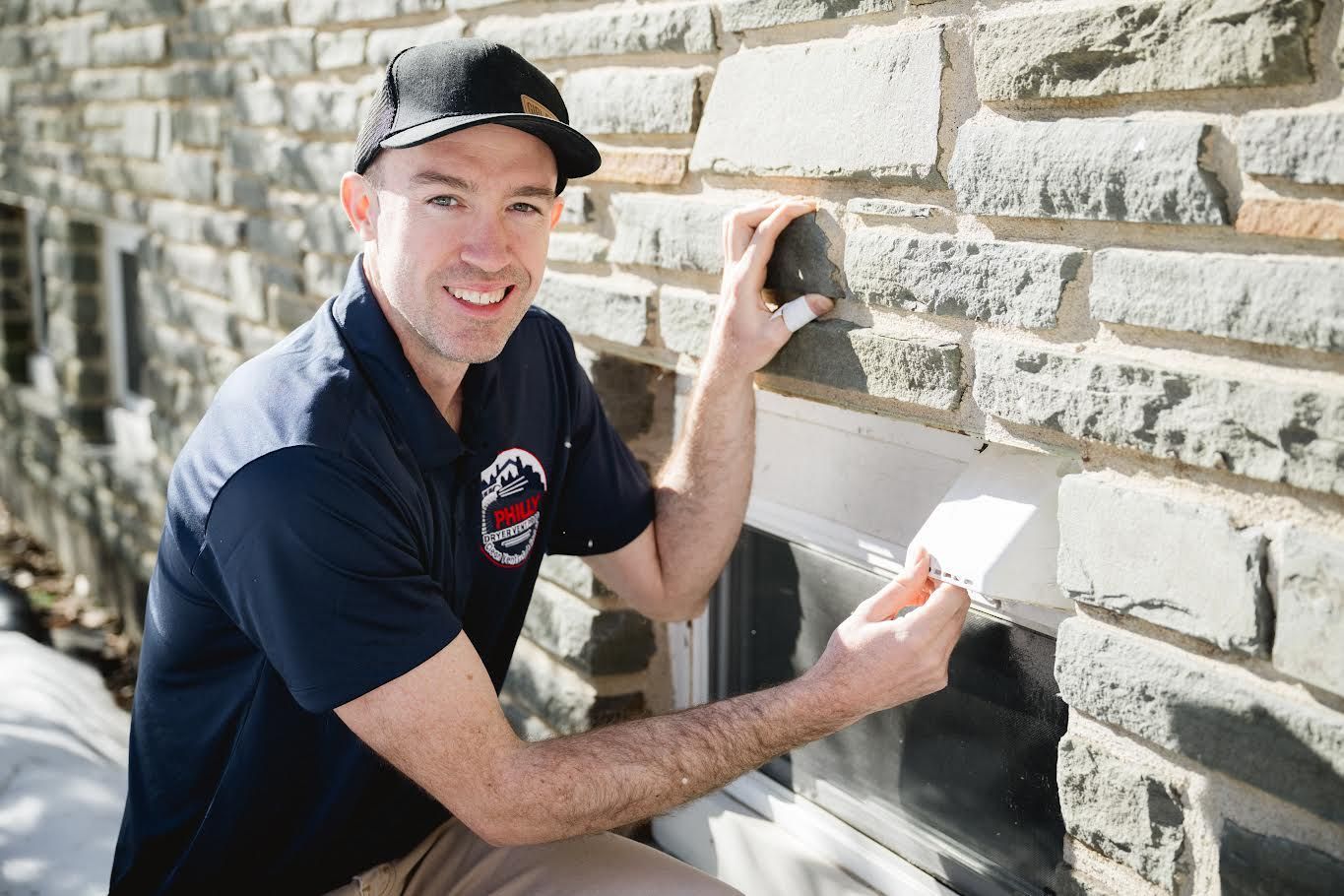
Can you install a dryer vent through brick?
Yes. Dryer vents can often be installed through brick when done properly using the correct tools, sealing methods, and exterior vent hood placement.
Should I install the dryer vent before my appliance delivery?
Yes. Having the vent installed beforehand helps avoid installation delays and ensures your dryer is ready to use as soon as it's delivered.
Schedule Professional Dryer Vent Services Today
If your dryer vent system may not be installed safely or efficiently, call or text Philly Dryer Vent Pros today.
We’ll inspect the system, identify any airflow or safety concerns, and help ensure your dryer vent installation is safe, efficient, and properly vented outside.