
Dryer Vent Maintenance in Philadelphia & Surrounding Areas
Professional Dryer Vent services
throughout Philadelphia and the surrounding suburbs
SERVICES
When Did You Last Have Your Dryer Vent Inspected?
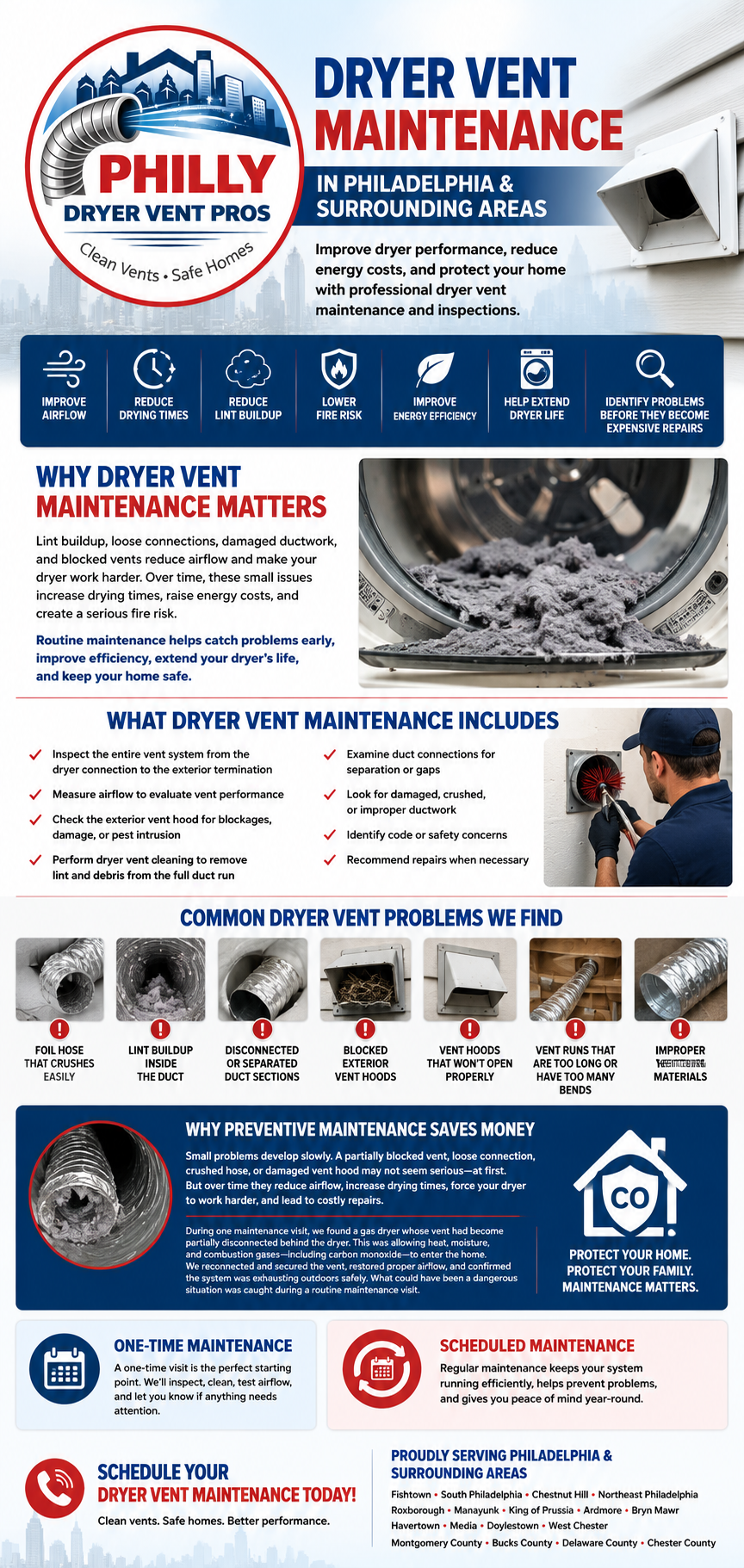
A professional dryer vent inspection is often the first step in a thorough maintenance visit because it helps identify developing issues before they affect safety or dryer performance.
Dryer vent maintenance is one of the simplest ways to improve dryer performance, reduce unnecessary wear on your appliance, and help prevent problems before they become expensive repairs.
Over time, lint buildup, loose connections, damaged ductwork, crushed vents, and exterior vent issues can all affect how well your dryer operates. Regular maintenance helps identify these problems early and keeps your dryer vent system operating safely and efficiently.
Whether your dryer is taking longer to dry clothes or you're simply staying ahead of routine maintenance, we're here to help.
Proper dryer vent maintenance also helps catch problems early before they lead to longer drying times, overheating, burning smells, or unnecessary wear on your dryer.
Serving Philadelphia & surrounding suburbs with licensed, professional service.
Why Dryer Vent Maintenance Matters
Your dryer vent system works every time you run a load of laundry, but unlike the lint trap inside the dryer, the vent itself is easy to forget about. Over time, lint, dust, moisture, and normal wear can gradually reduce airflow and affect how efficiently your dryer operates. Because these changes happen slowly, many homeowners don't notice a problem until drying times increase or the dryer begins showing signs of strain.
Routine dryer vent maintenance helps:
- Improve airflow
- Reduce drying times
- Reduce lint buildup
- Lower fire risk
- Improve energy efficiency
- Help extend dryer life
- Identify developing vent problems before they become expensive repairs
A well-maintained dryer vent system allows heat, moisture, and lint to exhaust outdoors the way your dryer was designed to operate. That not only helps your dryer perform more efficiently but also reduces unnecessary wear on the appliance and helps identify small issues before they turn into larger, more costly repairs.
What Dryer Vent Maintenance Includes
Every home is different, but dryer vent maintenance commonly includes:
- A dryer vent inspection that includes inspecting the entire vent system from the dryer connection to the exterior termination point
- Measuring airflow to evaluate vent performance
- Checking the exterior vent hood for blockages, damage, or pest intrusion
- Performing dryer vent cleaning to remove lint and debris from the full duct run
- Examining duct connections for separation or gaps
- Looking for damaged, crushed, or improper ductwork
- Identifying code or safety concerns
- Recommending repairs when necessary
Our goal is to identify small problems before they affect your dryer's performance or create larger safety concerns.
If we find damaged ductwork, improper vent materials, airflow restrictions, or other issues during the inspection, we'll explain what we found, discuss your options, and recommend the most appropriate solution before any additional work is performed. Depending on the condition of your vent system, that may include a
dryer vent repair or
dryer vent rerouting
to improve safety and airflow.
Why Preventive Dryer Vent Maintenance Saves Money
Small dryer vent problems often develop gradually. A partially blocked vent, loose duct connection, damaged vent hood, or crushed transition hose may not seem serious at first, but over time these issues can reduce airflow, increase drying times, force your dryer to work harder, and lead to more expensive repairs.
We recently inspected a home where the homeowner hadn't noticed anything unusual except that the dryer seemed to be taking a little longer to dry clothes. During the maintenance visit, we found a crushed transition hose behind the dryer and a partially blocked exterior vent hood. Neither issue had caused the dryer to stop working, but together they were significantly restricting airflow. Although the homeowner had only noticed slightly longer drying times, the reduced airflow was forcing the dryer to work harder, increasing energy use and putting unnecessary strain on the appliance. Catching those issues during a routine maintenance visit helped restore proper performance before they developed into a larger problem.
A dryer vent doesn't usually fail all at once. Airflow gradually becomes more restricted over time until performance starts to decline.
Routine dryer vent maintenance helps identify these issues early—often before homeowners notice a problem—helping improve efficiency, reduce wear on the dryer, and avoid unnecessary repair costs.
What We Commonly Find During Dryer Vent Inspections
Foil Transition Hose Behind the Dryer
Flexible foil hose is still one of the most common materials we find connecting the dryer to the vent system. It crushes easily, accumulates lint, and is not considered a safe long-term material for dryer venting. Replacing it with a properly installed rigid metal transition duct can improve airflow and help reduce lint accumulation.
Lint Buildup Inside the Duct
Even with regular lint trap cleaning, lint accumulates inside the vent duct over time. Heavy lint buildup restricts airflow, reduces dryer performance, and increases the risk of a dryer fire. Routine maintenance helps remove that buildup before it begins affecting the way your dryer operates.
Disconnected or Separated Duct Sections
In finished basements and walls, duct sections sometimes separate over time. When this happens, heat, moisture, and lint may exhaust inside the wall or ceiling cavity instead of outdoors. If the home has a gas dryer, a disconnected vent can also allow combustion gases, including carbon monoxide, to enter the living space. Identifying and correcting these issues is an important part of routine dryer vent maintenance.
Blocked Exterior Vent Hoods
Bird nests, wasp nests, lint accumulation, and damaged flaps are common at the exterior termination point. A blocked vent hood restricts airflow, forces the dryer to work harder, and can significantly increase drying times. During maintenance visits, we inspect the exterior vent hood to make sure it opens and closes properly and is free of obstructions.
Exterior Vent Hoods That Won't Open Properly
Sometimes the vent hood itself isn't blocked.Iit simply no longer opens and closes properly because of age, corrosion, or damage. Even without a blockage, this can restrict airflow, reduce dryer performance, and cause unnecessary strain on the appliance.
Vent Runs That Are Too Long or Have Too Many Bends
Homes where the dryer is far from an exterior wall often have vent runs that exceed recommended limits. Excessive length or too many bends reduce airflow, increase lint accumulation, and force the dryer to work harder. During maintenance visits, we evaluate the vent layout and recommend improvements when appropriate.
Improper Vent Materials
Plastic duct, thin foil, and other non-approved materials are still found in many homes, particularly older properties or homes where previous owners made DIY modifications. These materials can sag, trap lint, and restrict airflow over time. If we find improper vent materials during a maintenance visit, we'll explain why they're a concern and recommend safer alternatives.
Many of these problems develop gradually and often go unnoticed until drying performance begins to decline.
What Homeowners Usually Tell Us Before We Arrive
Most maintenance calls we receive start with one of these:
"My dryer is taking two or three cycles to dry a load."
"Our clothes don't seem completely dry anymore."
"The dryer feels much hotter than it used to."
"We've noticed a burning smell when the dryer runs."
"The laundry room feels humid."
"My dryer keeps shutting off mid-cycle."
"The outside vent doesn't seem to blow much air."
"We just bought this house and have no idea when it was last serviced."
These are often early signs that the dryer vent system needs attention. While some homeowners assume they need a new dryer, the real problem is often hidden inside the vent system. A professional maintenance visit can identify the cause before it leads to more significant performance or safety concerns.
A Recent Dryer Vent Issue We Solved
A homeowner in Roxborough called us after noticing her dryer had been taking two full cycles to dry a single load of laundry for the better part of a year.
She assumed it was the dryer itself and had already looked into replacing it.
Here's what we found.
The exterior vent hood had been completely blocked by a bird nest, and the flap hadn't opened freely in months. Behind that, the duct had a heavy lint buildup that had been restricting airflow long before the nest appeared.
Here's why it happened.
The exterior vent hood flap had weakened over time and was no longer closing properly between dryer cycles, making it an easy entry point for nesting. Once the flap stopped opening freely, airflow dropped significantly, forcing the dryer to work much harder than necessary.
Here's how we fixed it.
We removed the nest, cleared the lint from the duct, replaced the exterior vent hood with a proper pest-resistant model, and tested the airflow to confirm the dryer was exhausting correctly.
She didn't need a new dryer at all.
She needed a maintenance visit.
Once proper airflow was restored, her dryer returned to normal performance without replacing the appliance.
Common Problems We See in Philadelphia Homes and Surrounding Suburbs
hiladelphia and the surrounding suburbs each present their own dryer vent maintenance challenges that we see regularly across the region.
Brick Rowhomes with Long Interior Vent Runs
In many Philadelphia rowhomes, the laundry is stacked in a closet or located in a finished basement. That distance from the exterior wall often means longer vent runs with multiple bends, increasing lint accumulation and gradually reducing airflow over time.
Older Homes with Original Ductwork
Homes built before current safety recommendations were established—common throughout Philadelphia, Montgomery County, Bucks County, Delaware County, and Chester County—sometimes have dryer vents made from materials that are no longer recommended. These systems may appear functional but can restrict airflow and create safety concerns over time.
Finished Basements Where the Vent Runs Through Walls or Ceilings
Finished basements are common in suburban homes throughout the Main Line, South Jersey border towns, and Philadelphia's rowhouse neighborhoods. When a vent is hidden inside a finished wall or ceiling, it's easy to forget it exists. These runs can develop gaps, sag, or accumulate heavy lint buildup without any visible signs until dryer performance begins to decline.
Homes With Indoor Dryer Vent Kits
Some homes still rely on indoor dryer vent kits that release heat, moisture, and lint into the home instead of exhausting outdoors. During maintenance visits, we often recommend converting these systems to a properly vented exterior dryer vent to improve safety, airflow, and long-term performance.
Recently Purchased Homes with Unknown Vent History
We regularly service homes where the new owner has no idea when the dryer vent was last cleaned or whether it was properly installed to begin with. A maintenance visit after purchasing a home provides a clear understanding of the vent system's condition and identifies any issues before they become larger problems.
What Happens If Dryer Vent Maintenance Is Ignored?
Without routine maintenance, small dryer vent problems can gradually become larger and more expensive. Most dryer vent issues develop slowly, making them easy to overlook until performance noticeably declines.
Over time, homeowners may notice:
- Longer drying times
- Higher utility bills
- Excessive lint accumulation
- Dryer overheating
- Burning smells during operation
- Increased wear on the dryer
- Moisture problems inside the home
- Unexpected repair costs
Routine dryer vent maintenance helps identify these issues before they affect dryer performance, reduce efficiency, or require more extensive repairs.
One-Time Maintenance vs. Scheduled Service
One-Time Dryer Vent Maintenance
If your dryer vent hasn't been inspected or cleaned recently, a one-time maintenance visit is the right place to start. We'll inspect the entire system, perform dryer vent cleaning to remove accumulated lint and debris, check the exterior vent hood, test airflow, and let you know if anything else needs attention.
Scheduled Dryer Vent Maintenance
For homeowners who want ongoing peace of mind, we offer scheduled dryer vent maintenance. Regular service helps prevent lint buildup from reaching dangerous levels, keeps your dryer running efficiently, and provides a consistent record of your vent system's condition over time.
How often your dryer vent should be serviced depends on household size, dryer usage, pets, vent length, and the condition of the existing system. After the initial visit, we'll recommend a maintenance schedule that's appropriate for your home.
How Often Should Dryer Vent Maintenance Be Performed?
The right maintenance schedule depends on several factors, including:
- Household size
- Dryer usage frequency
- Pets
- Vent length
- Previous vent condition
Many homeowners benefit from having their dryer vent inspected and maintained approximately once a year. Homes with larger families, pets, frequent dryer use, or longer vent runs may benefit from more frequent maintenance.
Schedule Dryer Vent Maintenance
Whether you're experiencing dryer performance issues or simply want the peace of mind that comes from knowing your dryer vent system is operating safely, Philly Dryer Vent Pros can help with dryer vent maintenance, cleaning, inspections, and repairs.
If we identify any concerns during your maintenance visit, we'll explain what we found, why it happened, and the options available to correct it before any additional work is recommended.
We provide dryer vent maintenance throughout Philadelphia and the surrounding suburbs, including:
Fishtown
South Philadelphia
Chestnut Hill
Northeast Philadelphia
Roxborough
Manayunk
We also serve homeowners throughout:
King of Prussia
Ardmore
Bryn Mawr
Havertown
Media
Doylestown
West Chester
Montgomery County
Bucks County
Delaware County
Chester County
Frequently Asked Questions
What is included in dryer vent maintenance?
Dryer vent maintenance typically includes inspecting the full vent system, measuring airflow, performing dryer vent cleaning to remove lint and debris, examining ductwork and connections, inspecting the exterior vent hood, and recommending any needed repairs or improvements.
How often should dryer vent maintenance be performed?
Many homes benefit from annual dryer vent maintenance. Households with larger families, pets, frequent dryer use, or longer vent runs may benefit from more frequent service.
Is dryer vent maintenance the same as dryer vent cleaning?
Not exactly. Dryer vent cleaning removes accumulated lint and debris from the duct, while maintenance is a broader service that includes inspecting the entire vent system for airflow, safety, and performance issues.
Dryer vent cleaning is typically part of a maintenance visit, but maintenance goes further. If your dryer vent is due for a cleaning, we can perform dryer vent cleaning as part of the maintenance visit or as a standalone service.
Do you inspect the full vent system during a maintenance visit?
Yes. We inspect the dryer connection, the full duct run, and the exterior vent hood—not just the accessible sections.
What if you find a problem during the maintenance visit?
We'll explain what we found, why it's a concern, and what we recommend before any additional work is performed.
Do you offer scheduled dryer vent maintenance?
Yes. In addition to one-time maintenance visits, we offer scheduled service for homeowners who want regular dryer vent inspections and cleaning on an ongoing basis.
Can a blocked dryer vent cause a fire?
Lint is highly flammable. A dryer vent with heavy lint buildup restricts airflow and creates conditions where heat and lint accumulation increase fire risk over time. Regular maintenance helps reduce that risk.
Can routine dryer vent maintenance help my dryer last longer?
Yes. By maintaining proper airflow and reducing unnecessary strain on the appliance, routine dryer vent maintenance can help your dryer operate more efficiently and reduce wear over time.
Does cleaning my dryer's lint trap replace dryer vent maintenance?
No. Cleaning the lint trap after every load is important, but it doesn't remove lint that accumulates inside the dryer vent duct. Routine maintenance helps identify lint buildup, airflow restrictions, damaged ductwork, and other issues that the lint trap alone cannot prevent.
Schedule Professional Dryer Vent Services Today
If your dryer vent system may not be installed safely or efficiently, call or text Philly Dryer Vent Pros today.
We’ll inspect the system, identify any airflow or safety concerns, and help ensure your dryer vent installation is safe, efficient, and properly vented outside.