Dryer Vent Problems & Warning Signs in Philadelphia
Professional Dryer Vent services
throughout Philadelphia and the surrounding suburbs
SERVICES
Is Your Dryer Trying to Tell You Something?
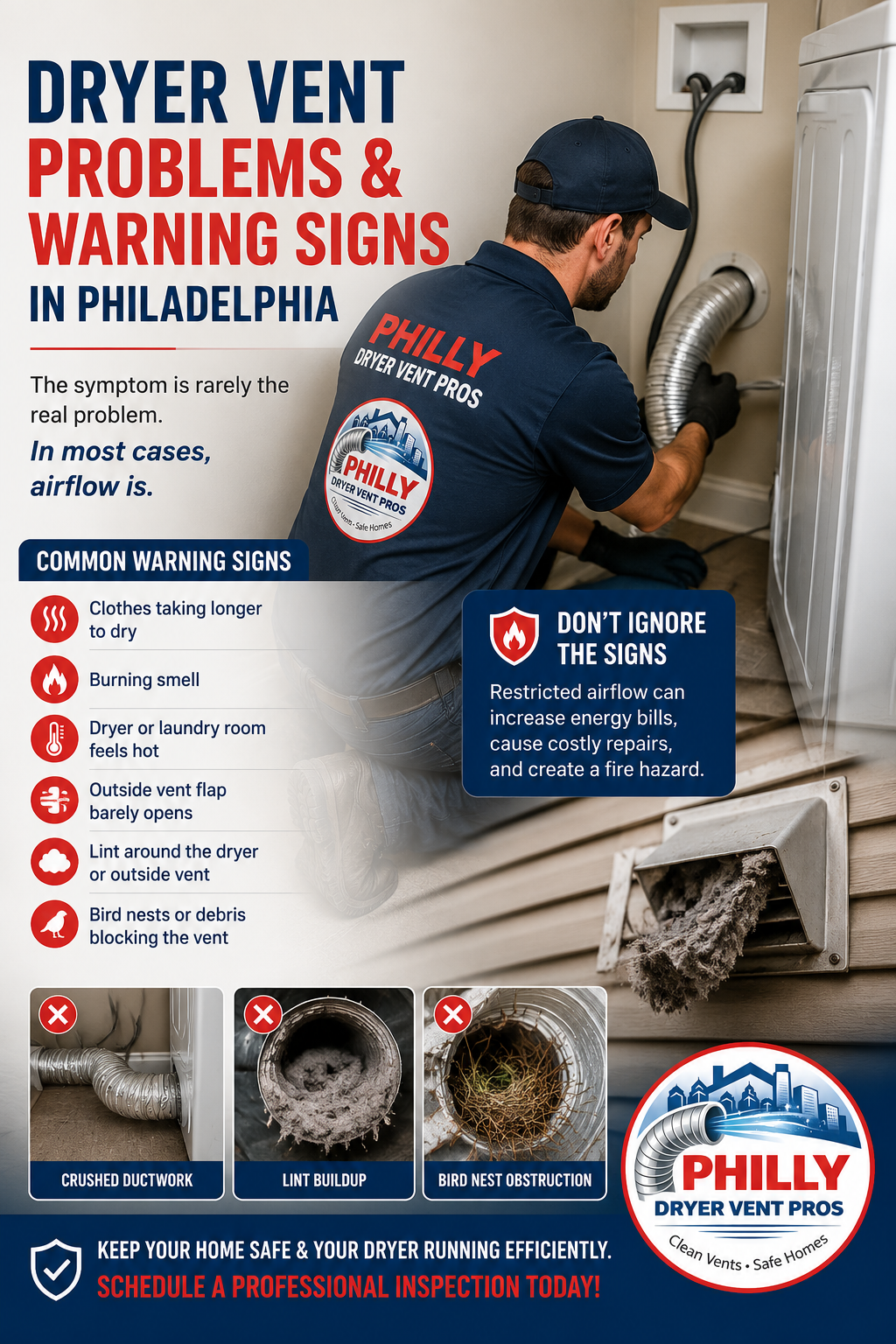
If your dryer has started taking longer to dry clothes, feels unusually hot, smells like something is burning, or isn't performing like it used to, the problem may not be the appliance itself. In many cases, the real issue is hidden inside the dryer vent system.
A dryer depends on unrestricted airflow to safely remove heat, moisture, and lint from your home. When that airflow becomes restricted — by lint buildup, damaged ductwork, improper vent materials, or other obstructions — the dryer has to work much harder to do the same job. Over time, this can reduce efficiency, increase energy costs, shorten the life of the appliance, and create a fire hazard.
Many homeowners assume they need an appliance repair, or even a new dryer, when the underlying problem is actually the vent system.
At Philly Dryer Vent Pros, we inspect and service dryer vent systems throughout Philadelphia and the surrounding suburbs every day. We regularly find airflow problems that homeowners had no idea existed until the symptoms became impossible to ignore.
This guide walks through the most common warning signs, what causes them, and how to know which solution actually fixes the problem you're experiencing.
The short version: the symptom is rarely the real problem.
In most cases, airflow is.
Serving Philadelphia & surrounding suburbs with licensed, professional service.
A Common Call We Receive
One of the most common calls we receive starts with a homeowner saying something like:
"I think my dryer is going bad. It suddenly started taking two or three cycles to dry our clothes."
Many people assume the appliance itself has reached the end of its life, but that's often not what we find.
On one recent service call, the dryer was heating properly, but the homeowner had noticed drying times getting progressively longer. After pulling the dryer away from the wall, we found the flexible transition hose had become severely crushed when the appliance had been pushed back into place. Airflow was almost completely restricted, causing excessive heat and forcing the dryer to run much longer than normal.
Once the damaged section was replaced and proper airflow was restored, the dryer returned to normal operation without the homeowner needing to replace the appliance.
Situations like this are exactly why it's important to identify the root cause before assuming the dryer itself needs to be repaired or replaced.
What Your Dryer May Be Trying to Tell You
Many different dryer vent issues produce similar symptoms. Only a professional inspection can pinpoint the exact cause, but this quick reference can help you understand what your dryer may be telling you.
Dryer Vent Warning Signs & Possible Causes
Dryer not Drying Properly
Clothes remain damp after a full cycle. Heavier items like towels, jeans, and bedding may still feel wet, or you find yourself running a second cycle just to finish the load. While many homeowners assume the dryer itself is failing, restricted airflow is often the real reason clothes aren't drying properly.
Possible Cause: Restricted airflow, lint buildup, or an obstructed vent
Experiencing this problem? Learn what causes a dryer to stop drying clothes properly and the most effective solutions for restoring normal performance.
______________________________
The dryer needs two or three cycles
If you're constantly restarting the dryer to finish one load, something isn't working as it should. While the clothes may eventually dry, taking two or three cycles is a sign that moisture isn't being exhausted efficiently. Besides wasting time, it also increases energy usage and places additional wear on your dryer.
Possible Cause: Poor exhaust airflow preventing moisture from escaping
Learn why a dryer takes multiple cycles to dry clothes and what the issue may indicate.
______________________________
You smell something burning
A burning smell, whether it appears right after starting the dryer or develops later in the cycle, should never be ignored. While some odors can have simple explanations, a persistent burning smell often indicates excessive heat or restricted airflow inside the dryer vent system. If you notice this warning sign, it's best to stop using the dryer until the cause has been identified.
Possible Cause: Excessive lint buildup or overheating. This needs prompt attention
______________________________
The outside vent flap barely opens
Your outside dryer vent flap should open freely whenever the dryer is running. If it barely moves or doesn't open at all, it's usually a sign that airflow is being restricted somewhere within the dryer vent system.
Sometimes the cause is visible from outside, but many airflow restrictions are hidden inside the vent and can't be seen without a proper inspection. Ignoring this warning sign can lead to longer drying times, overheating, and unnecessary wear on your dryer.
Possible Cause: A blockage, crushed duct, bird nest, or severe restriction
______________________________
The laundry room feels hot or humid
Your laundry room shouldn't become noticeably hotter or more humid every time the dryer runs. If you consistently notice excess heat, humidity, or a damp feeling in the room, it may be a sign that warm, moist air isn't being exhausted properly.
Over time, poor ventilation can reduce drying efficiency, place additional strain on your dryer, and contribute to excess moisture inside your home.
Possible Cause: Restricted airflow, a disconnected or leaking vent, an indoor dryer vent system, or another issue preventing proper exhaust.
______________________________
The dryer shuts off before clothes are dry
If your dryer stops running before the cycle is complete and your clothes are still damp, it may be shutting itself off to prevent damage from excessive heat. Many modern dryers have built-in safety features that automatically stop the appliance when overheating is detected.
Possible Cause: The appliance may be overheating and triggering a built-in safety shutoff due to restricted airflow.
______________________________
Lint is collecting behind the dryer
Lint collecting behind the dryer, around duct connections, or near the exterior vent hood isn't something to ignore. While a small amount of lint in the lint trap is normal, lint escaping into your laundry room or around the vent system may indicate that air is leaking from damaged or disconnected ductwork instead of being exhausted safely outside.
Possible Cause: Loose or damaged vent connections letting lint escape into the home
Don't use this to diagnose the exact problem. Several different issues can produce the same warning signs, which is why a complete dryer vent inspection is the best way to determine the underlying cause.
A Recent Dryer Vent Problem We Solved
Not every dryer vent problem starts inside the home.
We recently responded to a homeowner who noticed their dryer suddenly began taking much longer to dry clothes. They had cleaned the lint trap after every load and assumed the dryer itself was beginning to fail.
During our inspection, we found the problem outside the home. Birds had built a nest inside the exterior dryer vent, severely restricting airflow. Because the warm, moist air couldn't escape properly, the dryer had to work much harder to dry each load.
After safely removing the nesting materials and confirming the vent system was clear, airflow returned to normal and the dryer's performance improved significantly.
It's a good reminder that some of the most serious dryer vent problems aren't visible from inside the laundry room.
One Dryer Vent roblem Can Create Multiple Symptoms
Many homeowners focus on the first symptom they notice, but dryer vent problems rarely occur in isolation. A clogged or restricted vent may cause longer drying times, excessive heat, a burning smell, lint buildup around the dryer, and even automatic safety shutoffs, all at the same time.
Because these warning signs often appear together, it's easy to assume multiple things are wrong with the dryer. In reality, they may all be caused by the same underlying airflow problem.
That's why it's important to evaluate the entire dryer vent system rather than treating each symptom as a separate issue. Restoring proper airflow often resolves several warning signs at once and helps prevent more serious problems from developing.
When Multiple Symptoms Appear Together
One warning sign is often enough to indicate something isn't right but many homeowners experience several at once.
We hear things like:
"The dryer takes two cycles now, and the laundry room gets really hot."
"We noticed a burning smell, and the outside vent barely opens anymore."
"Our clothes aren't drying, and we found lint collecting behind the dryer."
When multiple symptoms show up together, they're usually connected by the same underlying issue: restricted airflow somewhere in the vent system.
Understanding what actually causes that restriction and why different homes need different fixes is just as important.
What Actually Causes Dryer Vent Problems?
While the warning signs above can look very different from each other, most trace back to one common issue: restricted airflow. Below are the causes we find most often during inspections throughout Philadelphia and the surrounding suburbs.
Lint Buildup
Every drying cycle sends tiny lint particles past the lint trap and into the vent system. Over months and years, that buildup narrows the passageway and reduces airflow, which is why drying times often get progressively longer rather than changing overnight. In most cases, professional dryer vent cleaning restores proper airflow before the problem grows into something more expensive.
Damaged or Disconnected Ductwork
Not every airflow problem comes from lint. Vent sections can loosen, sag, disconnect, or become crushed behind the dryer over time, allowing warm air to escape into the laundry room instead of outside. When damaged ductwork is the culprit, dryer vent repair, rather than cleaning, is typically the right solution.
Improper Installation
A vent system can look completely normal from behind the dryer while hiding real problems inside walls, ceilings, or crawl spaces, including excessive bends, poor routing, unsupported ductwork, or incorrect materials. These issues are especially common in older homes, laundry room additions, or homes where a dryer vent had to be installed because no existing dryer hookup was available.
They create airflow resistance that cleaning alone won't solve. When that's the case, a properly designed dryer vent installation is the more effective long term solution.
A Home We Recently Inspected
We recently inspected a home where the dryer had been professionally cleaned several times over the years, but the homeowner still experienced long drying times.
During the inspection, we discovered the vent had been rerouted during a previous renovation. From behind the dryer, everything looked fine, but the vent actually traveled through multiple walls and included several unnecessary turns before finally exiting the home.
Cleaning had helped temporarily each time, but the underlying routing kept restricting airflow. After discussing the options, rerouting the vent to a much shorter, more direct path to the exterior significantly improved performance. It was a problem that repeated cleanings alone were never going to solve.
Non Code Compliant Materials or Layouts
In many homes we inspect, the existing vent system simply doesn't meet current installation standards. Improper materials, excessive length, unnecessary elbows, or changes made during past renovations without following code can all restrict airflow. These systems may still function, but they often increase lint accumulation and reduce efficiency by design. A code compliant dryer vent installation addresses these issues at the source rather than patching around them.
Flexible Foil or Plastic Venting
Flexible transition ducts are inexpensive and common, especially in older homes or DIY installations, but they crush easily, sag between supports, and trap lint inside their ridges. Replacing this material with rigid metal duct improves airflow, holds up longer, and makes future maintenance easier. Learn why replacing flexible dryer vent hose with rigid metal ducting is often worth the upgrade.
Long or Poorly Routed Vent Runs
Some vent systems travel much farther than necessary, winding through basements, garages, or multiple walls before reaching an exterior termination. Every extra foot and every additional bend adds resistance, which is why repeated cleanings sometimes provide only temporary relief. When the routing itself is the problem, dryer vent rerouting offers a more permanent solution.
Indoor Dryer Vent Systems
Indoor vent kits release heat, moisture, and fine lint directly into the home instead of venting outside. This can contribute to excess humidity, dust, and reduced drying efficiency. Learn why indoor dryer vents are not considered a safe long term solution. For homes with one already installed, an indoor dryer vent conversion provides a safer, code compliant path to proper exterior venting.
Animal Nests and Exterior Obstructions
Birds are attracted to the warm air coming from exterior dryer vents, especially when the vent cover no longer closes properly. Leaves, debris, and damaged vent covers can also obstruct airflow. Because these issues are often hidden from view, many homeowners don't discover them until drying performance has already started to decline.
What We Commonly Find During Inspections
Every home is different, but certain conditions show up again and again during inspections throughout Philadelphia and the surrounding suburbs. In many cases, we don't find one major issue. Instead, we find several smaller problems working together to restrict airflow and reduce your dryer's performance.
Crushed Transition Hoses
One of the most common issues we find is a crushed transition hose behind the dryer. This often happens after the dryer has been pushed back into place following a repair, cleaning, or replacement, restricting airflow without the homeowner realizing it.
Loose or Disconnected Ductwork
Homes settle over time, and previous repair work isn't always done correctly. Loose or disconnected vent sections can allow warm air and lint to escape into walls, crawl spaces, attics, or the laundry room instead of exhausting safely outside.
Flexible Foil Venting
Flexible foil venting is still common throughout older Philadelphia homes. While inexpensive, it crushes easily, sags over time, and traps lint inside its ridges, reducing airflow and making future maintenance more difficult.
Excessive Bends
We frequently find vent systems with far more turns than necessary. Every additional bend creates more resistance, slows airflow, and allows lint to accumulate more quickly.
Heavy Lint Buildup
Even in homes where the lint trap is cleaned after every load, we're often surprised by how much lint has accumulated deep inside the vent system.
One of the most common things we hear is, "But I clean the lint trap every time." That's exactly what you should do. However, the lint trap only captures a portion of the lint produced during each drying cycle. Fine lint continues traveling through the vent system, where it gradually builds up over time.
Many homes throughout Philadelphia and the surrounding suburbs were built long before today's dryer vent installation standards existed. Older rowhomes, twins, and townhouses, along with laundry rooms relocated during remodeling projects, often have unusually long vent runs or complicated routing through basements, crawl spaces, and ceilings. While that doesn't automatically mean there's a problem, it does make maintaining proper airflow more challenging and highlights the importance of periodic inspections.
What Homeowners Usually Tell Us Before We Arrive
Many service calls begin with nearly identical conversations because dryer vent problems often develop gradually. Homeowners frequently tell us things like:
- "It used to dry everything in one cycle."
- "The dryer still works. It just takes forever now."
- "We thought we needed a new dryer."
- "The laundry room gets much hotter than it used to."
- "There's a strange burning smell every now and then."
- "We clean the lint trap every time, so we're not sure what the problem is."
- "The outside vent barely blows any air anymore."
These observations are valuable clues, but they rarely reveal the underlying cause on their own. The same symptom can be caused by several different dryer vent issues, which is why a professional inspection looks at the entire vent system rather than assuming every warning sign has the same explanation.
Not Every Dryer Vent Problem Has the Same Solution
One of the biggest misconceptions we encounter is that every dryer vent problem can be solved with a simple cleaning. While cleaning resolves many airflow issues, it isn't the right solution for every situation.
Two homeowners can experience the exact same symptom, such as clothes taking multiple cycles to dry, and have completely different underlying causes. One home may have heavy lint buildup, another may have crushed ductwork, another may have an unnecessarily long vent run, and another may have an indoor dryer vent system releasing heat and moisture back into the home. That's especially true throughout Philadelphia and the surrounding suburbs, where homes of different ages and layouts can produce the same warning signs for very different reasons.
That's why we inspect the entire dryer vent system before recommending a solution rather than assuming every problem requires the same service.
Depending on what we find, we may recommend:
Dryer Vent Cleaning
Professional dryer vent cleaning is often the right solution when lint buildup is restricting airflow and the rest of the vent system is in good condition. Removing accumulated lint helps restore airflow, improve drying performance, and reduce the risk of overheating.
Dryer Vent Repair
If the vent system has loose connections, crushed sections, or disconnected ductwork, a dryer vent repair may be all that's needed to restore safe and efficient operation.
Dryer Vent Installation
When the existing vent system was never properly installed, poor routing or incorrect materials can create airflow restrictions that cleaning alone can't solve. In these cases, a new dryer vent installation is often the best long term solution.
Code Compliant Dryer Vent Installation
Some dryer vent systems no longer meet current installation standards. Upgrading the layout and materials to meet code can improve airflow, increase safety, and reduce future maintenance issues.
Replacing Flexible Venting with Rigid Metal Duct
Flexible foil duct is easily crushed and tends to collect lint. Replacing it with rigid metal duct improves airflow, provides a more durable installation, and makes future maintenance easier.
Dryer Vent Rerouting
If the vent path is unnecessarily long or includes excessive bends, rerouting the dryer vent can significantly improve airflow and provide a more permanent solution than repeated cleanings.
Indoor Dryer Vent Conversion
Homes with an indoor dryer vent system can often benefit from converting to a properly vented exterior system, reducing excess moisture, airborne lint, and humidity inside the home.
Dryer Vent Maintenance
Routine dryer vent maintenance helps identify developing issues before they become larger, more expensive problems and keeps the entire vent system operating efficiently.
Why You Shouldn't Ignore the Warning Signs
Dryer vent problems rarely improve on their own. In most cases, they become worse over time as lint continues to accumulate or airflow becomes increasingly restricted. Addressing the problem early is usually simpler, less expensive, and safer than waiting until the symptoms become severe.
Ignoring these warning signs can lead to:
- Higher utility bills, because restricted airflow forces the dryer to run longer and use more energy to dry the same load.
- Increased wear on your dryer, as heating elements, motors, sensors, and other components work harder than they were designed to.
- More expensive repairs, since a small issue today, such as replacing a crushed transition hose, is often much less costly than repairing damage caused by prolonged overheating.
- Excess heat and moisture inside the home, when warm, humid air isn't being exhausted properly.
- An increased risk of fire, because restricted airflow allows heat to build up around highly combustible lint.
Dryer related fires are a real and well documented risk. According to the National Fire Protection Association, thousands of home fires involving clothes dryers occur each year, with failure to clean the dryer or dryer vent system identified as one of the leading contributing factors.
Taking these warning signs seriously and addressing them early can help improve your dryer's performance, extend its lifespan, reduce energy costs, and make your home safer.
Why a Professional Inspection Matters
Many dryer vent problems produce the same warning signs, but the underlying cause isn't always the same. A dryer taking multiple cycles to dry clothes may simply need professional cleaning. In another home, the exact same symptom could be caused by crushed ductwork, improper vent materials, a bird nest, a disconnected vent, or an unnecessarily long vent run.
Without a complete inspection, it's easy to treat the symptom instead of the actual problem.
That's why we inspect the entire dryer vent system before recommending any solution. Identifying the root cause helps ensure the problem is resolved correctly the first time, improves long term performance, and helps prevent the same issues from returning.
I think this reads a little better because it reinforces the page's central message: don't just fix the symptom, identify the cause. It also introduces "root cause," which is a phrase people naturally associate with diagnostics and professional inspections.
Preventing Future Dryer Vent Problems
Many dryer vent problems can be prevented with routine maintenance and by paying attention to early warning signs. A few simple habits can help keep your dryer running safely and efficiently:
- Clean the lint trap after every load.
- Keep the area behind the dryer free of excess lint.
- Watch for changes in drying performance.
- Check that the outside vent flap opens fully while the dryer is running.
- Schedule periodic dryer vent inspections.
- Have the vent professionally cleaned as needed.
- Address damaged or outdated vent materials before they become larger problems.
Preventive maintenance is almost always less expensive than waiting until performance declines or repairs become necessary. Regular dryer vent maintenance can also identify developing issues early, helping improve airflow, extend the life of your dryer, reduce energy costs, and lower the risk of future problems.
Frequently Asked Questions
How do I know if my dryer or the vent is the problem?
Many dryer symptoms are caused by restricted airflow rather than a faulty appliance. A professional inspection can determine whether the issue is with the dryer itself or the vent system, helping you avoid unnecessary appliance repairs or replacement.
Can dryer vent cleaning fix every problem?
No. Professional cleaning removes lint buildup, but some problems are caused by damaged ductwork, poor routing, improper vent materials, or installation issues that may require repair, rerouting, or replacement instead.
Is a burning smell always dangerous?
Any burning smell should be taken seriously. Stop using the dryer until the cause has been identified. Restricted airflow, overheating, and excessive lint buildup can all create unsafe conditions and shouldn't be ignored.
How often should dryer vents be cleaned?
The right cleaning schedule depends on factors such as household size, how often the dryer is used, the length of the vent run, and the type of items being dried. Homes with heavier dryer usage typically require more frequent cleaning than those with occasional use.
Should I replace flexible foil venting?
In many cases, yes. Rigid metal duct provides better airflow, is more durable, and is less likely to trap lint than flexible foil or plastic venting. It's generally the preferred material for modern dryer vent systems.
Can a bird nest block my dryer vent?
Yes. Bird nests can significantly restrict airflow and lead to longer drying times, overheating, increased energy use, and other dryer vent problems. If you suspect a nest is blocking your vent, it's important to have it removed before continuing to use the dryer.
Schedule Professional Dryer Vent Services Today
If your dryer has been showing one or more of these warning signs, don't assume the appliance needs to be repaired or replaced. In many cases, the real problem is hidden within the dryer vent system.
Identifying the underlying cause is the first step toward restoring safe, efficient performance and preventing more expensive problems down the road.
Philly Dryer Vent Pros provides professional dryer vent inspections, cleaning, repairs, maintenance, rerouting, indoor dryer vent conversions, and code compliant dryer vent installations throughout Philadelphia and the surrounding suburbs.
Schedule your dryer vent inspection today and let us determine what's really causing your dryer's warning signs.